

Hysopt Simulator: Dynamic HVAC Simulation Software That Predicts Real-World Performance
Validate HVAC system performance before construction using a physics-based digital twin that simulates weather, load profiles, control strategies and equipment behaviour over time.
Reduce operating cost risk, eliminate performance surprises and defend HVAC design decisions with simulation-backed evidence instead of assumptions.
What is the Hysopt Simulator?
Hysopt Simulator is dynamic HVAC simulation software that predicts how hydronic HVAC systems will actually perform before they're built.
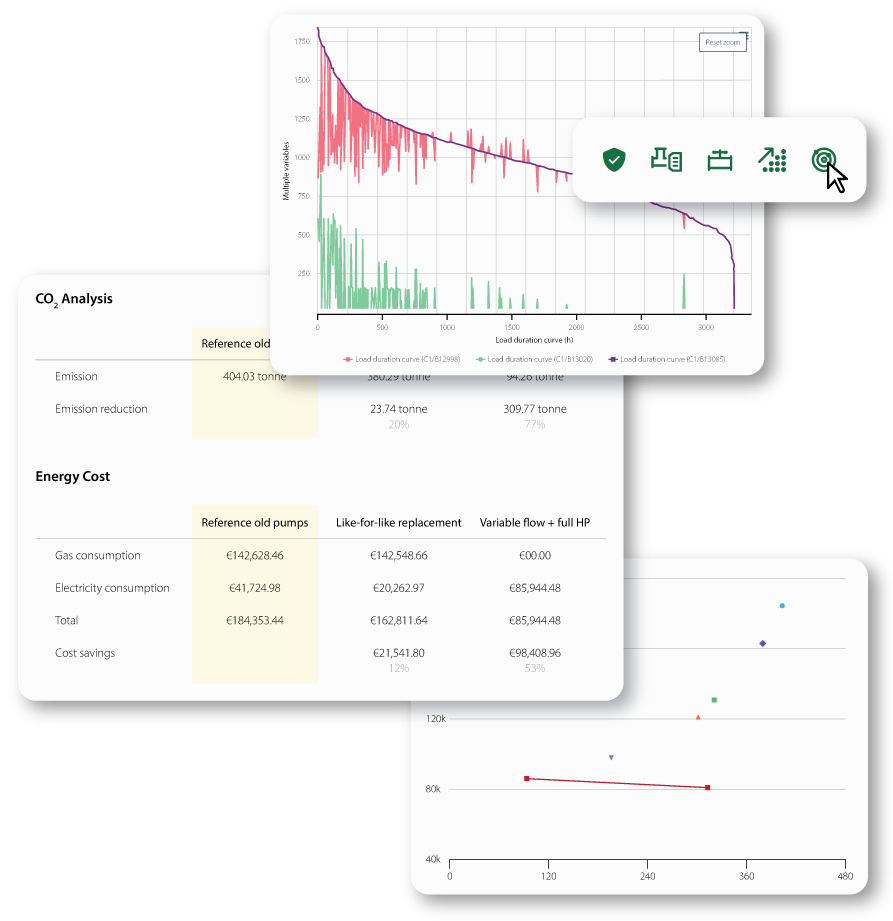
Using Hysopt's physics-based digital twin, engineers can simulate HVAC system behaviour across changing weather conditions, load profiles and control strategies to understand how design decisions affect energy use, comfort, CO₂ emissions and operating costs.
Instead of relying on steady-state calculations or engineering assumptions, Hysopt Simulator reveals how the complete HVAC system behaves over time—helping engineering teams optimise designs, reduce energy risk and confidently prove real-world performance before construction begins.
Autodesk AECO Strategic Partner
Hysopt brings BIM and physics-based HVAC simulation closer together, so teams can right-size plant, cut energy & CO₂, and reduce rework from P&ID to BIM.
Main features of the Hysopt Simulator

Intuitive P&ID modelling
Build simulation-ready HVAC models in minutes.
Create complete hydronic HVAC systems using an intuitive visual P&ID environment. Modify designs quickly while every calculation remains connected to the same physics-based digital twin.
Hydraulic validation
Validate the system before you simulate it.
Automatically detect missing components, hydraulic conflicts and design inconsistencies before running simulations. Start every performance study from a technically sound HVAC model.
Power, flow & temperature propagation
Simulate from accurate engineering calculations.
Automatically calculate flow rates, temperatures and energy balances across the complete hydronic system. Every simulation is based on consistent system behaviour—not disconnected assumptions.
Pipe sizing
Optimise pipe sizing before performance is locked in.
Automatically size HVAC piping using recognised engineering standards and evaluate how sizing decisions influence hydraulic performance, energy use and operating costs.

Proven concepts library
Start from proven HVAC system concepts.
Accelerate simulation studies using validated energy centre templates with integrated control strategies. Compare concepts faster without rebuilding every system from scratch.
Dynamic system simulation
Predict real-world HVAC performance before construction.
Simulate HVAC system behaviour across changing weather, load profiles and control strategies. Identify inefficiencies, equipment cycling and operational risks before they become costly in operation.
Sensitivity analysis
Understand what really drives HVAC performance.
Automatically test multiple design parameters to see how changes affect energy consumption, operating cost, comfort and equipment sizing. Optimise designs using data instead of engineering assumptions.
Pareto analysis
Find the best balance between cost, carbon and performance.
Compare HVAC design alternatives using CAPEX, OPEX, CO₂ emissions, energy consumption and comfort in one clear visual analysis. Defend engineering decisions with transparent, quantifiable trade-offs.

Frequently asked questions
What is HVAC simulation software?
What is dynamic HVAC simulation?
How is Hysopt Simulator different from steady-state HVAC calculations?
Why use a physics-based digital twin for HVAC simulation?
What can Hysopt Simulator predict?
Can Hysopt simulate heat pump performance?
Can Hysopt simulate HVAC control strategies?
Can Hysopt compare multiple HVAC design alternatives?
What is Pareto analysis in HVAC design?
What is sensitivity analysis in HVAC simulation?
Which HVAC projects is Hysopt Simulator suitable for?
Who is Hysopt Simulator built for?
How does Hysopt reduce operational and performance risk?
Explore our resources

Adressing the Pressing Challenges in Today's HVAC Industry

Discover the Renewed Hysopt Inspiration Library

HVAC Talk of the Week: Calculating Design Flows
Ready to engineer HVAC systems with greater confidence?
Reduce oversizing • Eliminate rework • Defend design decisions • Predict performance before construction
Design, validate, simulate and optimise hydronic HVAC systems using one physics-based digital twin.
Join the Hysopt Academy
Learn how to use the Hysopt software, and gain advanced knowledge on the latest HVAC technologies.
Get tutored by our in-house experts online, in real-life or on demand.


.png)
.png)