

Hysopt Feasibility: Bid Phase HVAC Feasibility & Optioneering in 1–2 Hours
Reach client-ready HVAC feasibility decisions in hours, not weeks. Generate and compare multiple HVAC concepts, evaluate CAPEX, OPEX, CO₂ and key system sizing decisions, then deliver a professional Feasibility Pack backed by Hysopt's physics-based digital twin.
What is the Hysopt Feasibility?
Hysopt Feasibility helps HVAC engineers and MEP consultants reach client-ready HVAC feasibility decisions in just 1–2 hours instead of weeks.
Generate and compare multiple HVAC concepts using minimal inputs, evaluate CAPEX, OPEX, CO₂ and key system sizing decisions, then deliver a professional HVAC Feasibility Pack with system variants, KPIs, assumptions and engineering evidence—giving clients confidence in the recommended solution before detailed design begins.
Powered by Hysopt Designer and Simulator, every feasibility study is built on the same physics-based hydronic HVAC digital twin used throughout detailed design and dynamic simulation, ensuring decisions are based on engineering evidence rather than assumptions.
Explore Winning Feasibility Decisions
Main Features of the Hysopt Feasibility

Template driven variant creation
Compare more HVAC concepts in less time
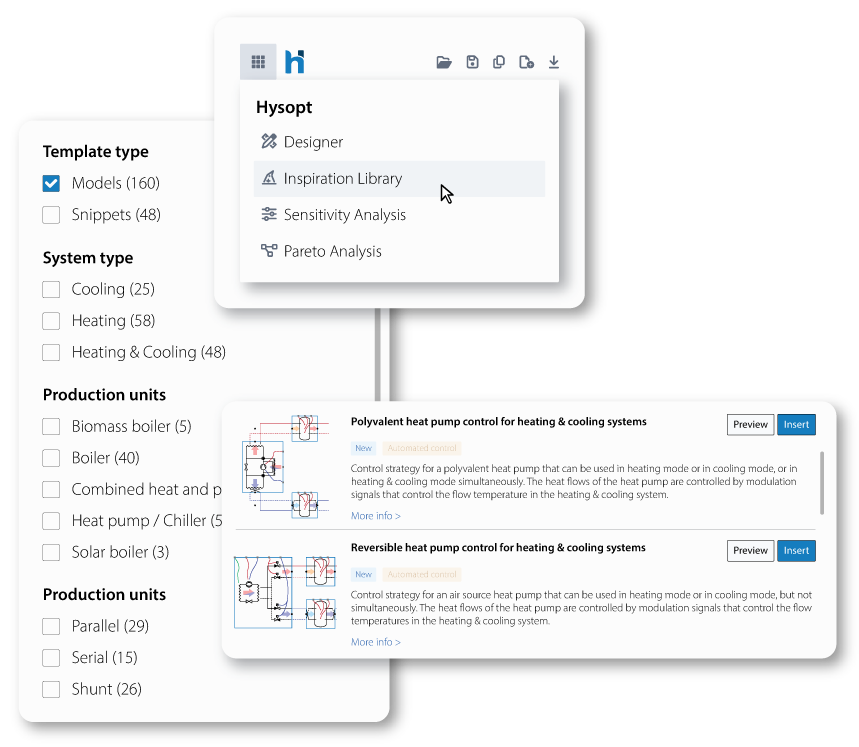
Start from 160+ proven HVAC system templates to generate and compare multiple feasibility options in minutes—without starting from a blank page.

KPI comparison you can defend
Compare HVAC options with confidence
Evaluate CAPEX, OPEX, CO₂ and key system sizing decisions in one side-by-side view, making trade-offs clear for clients and project stakeholders.
Physics based modelling & hydraulic validation
Validate concepts before committing to design
Create simple P&ID models with built-in hydraulic validation to identify oversizing, missing components and design risks early—before detailed engineering begins.
Digital twin simulation & pareto analysis
Predict real-world HVAC performance
Use physics-based digital twin simulation and Pareto analysis to compare energy, comfort, carbon and operating costs, ensuring every feasibility decision is backed by engineering evidence.
From brief to client-ready feasibility study
1. Define the project
Select the building type, project goals, constraints and key performance targets.
2. Generate concepts
Start from the Hysopt Concept Template Library to create multiple HVAC system options in minutes.
3. Validate performance
Apply physics-based hydraulic validation and digital twin simulation using only the inputs needed for feasibility.
4. Compare alternatives
Evaluate CAPEX, OPEX, CO₂ and key system sizing decisions side by side to identify the optimal concept.
5. Deliver your Feasibility Pack
Export a client-ready HVAC Feasibility Pack with system variants, KPIs, assumptions and engineering evidence.

M&E Consultants
Deliver faster, more defensible HVAC feasibility studies for tenders, early-stage design and client presentations.

Decarbonisation Engineers
Evaluate retrofit and electrification strategies with transparent CAPEX, OPEX and CO₂ analysis before investment decisions are made.

What's included
Everything you need to deliver client-ready HVAC feasibility studies from day one.
- Hysopt Designer & Simulator configured for feasibility and HVAC optioneering
- Up to 10 hours of expert onboarding focused on feasibility workflows—not generic software training
- Custom Concept Templates for your most common building types (8 service hours per template)
- Your first client-ready HVAC Feasibility Pack, including system variants, KPIs, assumptions and presentation-ready outputs
€4,750 + implementation services (template creation quoted separately)
Ready to Objectify Feasibility in 1–2 Hours?
Frequently Asked Questions
What is an HVAC feasibility study?
What is HVAC optioneering?
Why use a physics-based digital twin for HVAC feasibility?
How is Hysopt Feasibility different from Excel?
Is Hysopt suitable for tender-stage HVAC design?
Can Hysopt support retrofit and decarbonisation projects?
Which building types can Hysopt Feasibility be used for?
Can Hysopt compare heat pump systems?
What information do I need to start an HVAC feasibility study?
Can an HVAC feasibility study really be completed in 1–2 hours?
Which KPIs can Hysopt compare?
What is included in the Feasibility Pack?
Do we need BIM to use Hysopt Feasibility?
How does Hysopt reduce project risk?
Autodesk AECO Strategic Partner
Hysopt brings BIM and physics-based HVAC simulation closer together—supporting right sizing, lower energy & CO₂, and less rework from P&ID to BIM.


.png)
.png)