
DATA CENTRE HVAC SIMULATION SOFTWARE
Design more resilient data centre cooling systems
Modern AI data centres demand more from HVAC engineering than ever before.
Hysopt helps engineering teams model, simulate and validate hydronic cooling systems before construction — supporting more confident design decisions, better system understanding and reduced engineering risk for mission-critical cooling infrastructure.
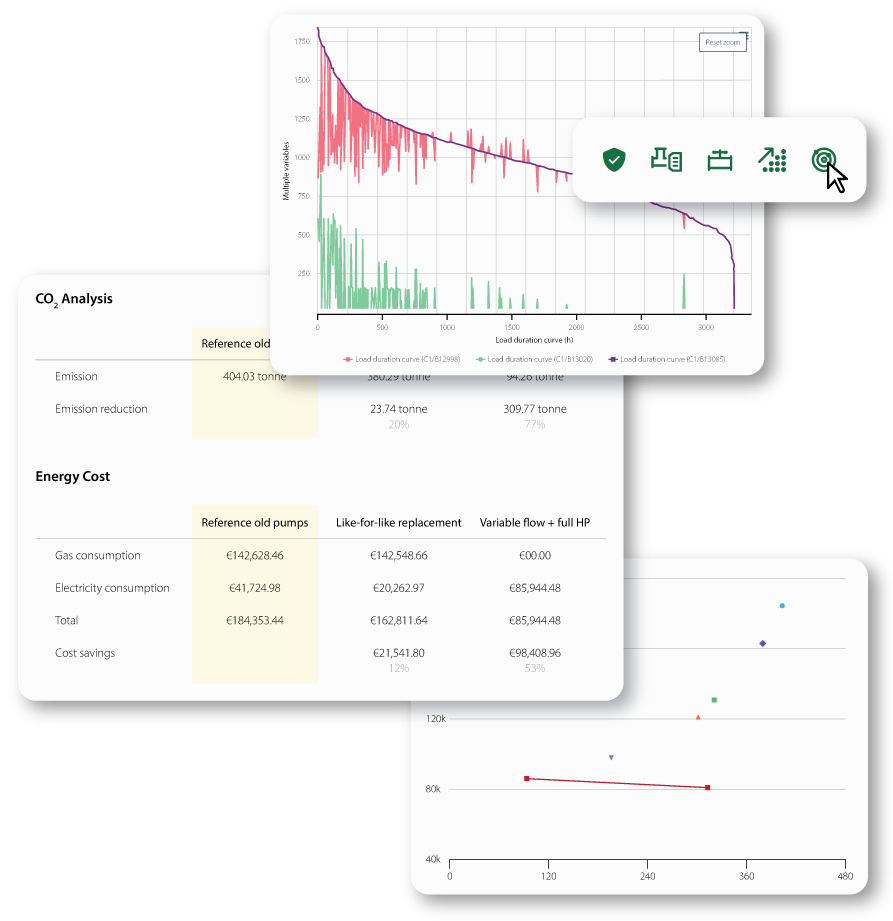
Bring simulation into data centre HVAC design
Data centre cooling systems are becoming more complex. Higher rack densities, stricter uptime expectations, redundancy requirements and rising energy costs are pushing HVAC engineering teams beyond traditional calculation workflows.
For mission-critical facilities, engineers need to understand not only how a system is sized, but how it behaves under changing loads, part-load conditions, operating modes, maintenance scenarios and failure events.
Hysopt brings physics-based HVAC simulation into the data centre engineering process, helping teams evaluate cooling concepts, validate assumptions and support critical decisions with transparent system-level evidence.
You can use Hysopt to:
- Simulate hydronic cooling system behaviour before construction
- Compare chilled water concepts, plant configurations and operating scenarios with consistent engineering data
- Understand flow, pressure, temperature and control behaviour across the system
- Support design reviews, technical discussions and commissioning preparation with simulation-backed evidence
Need to validate a data centre cooling concept before detailed design?
Understand hydraulic behaviour before it becomes a site problem
In data centres, conservative design choices are common. But without simulation, it can be difficult to know whether those choices are genuinely protecting uptime or simply adding unnecessary capacity, complexity and energy use.
Hysopt helps engineering teams analyse hydronic system behaviour before construction, so potential issues can be identified earlier and discussed with greater confidence.
Use Hysopt to support:
- Hydraulic behaviour analysis under different operating conditions
- Scenario-based validation of chilled water cooling concepts
- Pump, valve and flow behaviour assessment
- Part-load and changing-load simulation
- Support for N+1, 2N and failover scenario discussions
- Design decision support for complex hydronic systems
- Transparent communication between consultants, contractors, owners and technical teams
Want to understand how your cooling system behaves under real operating conditions?
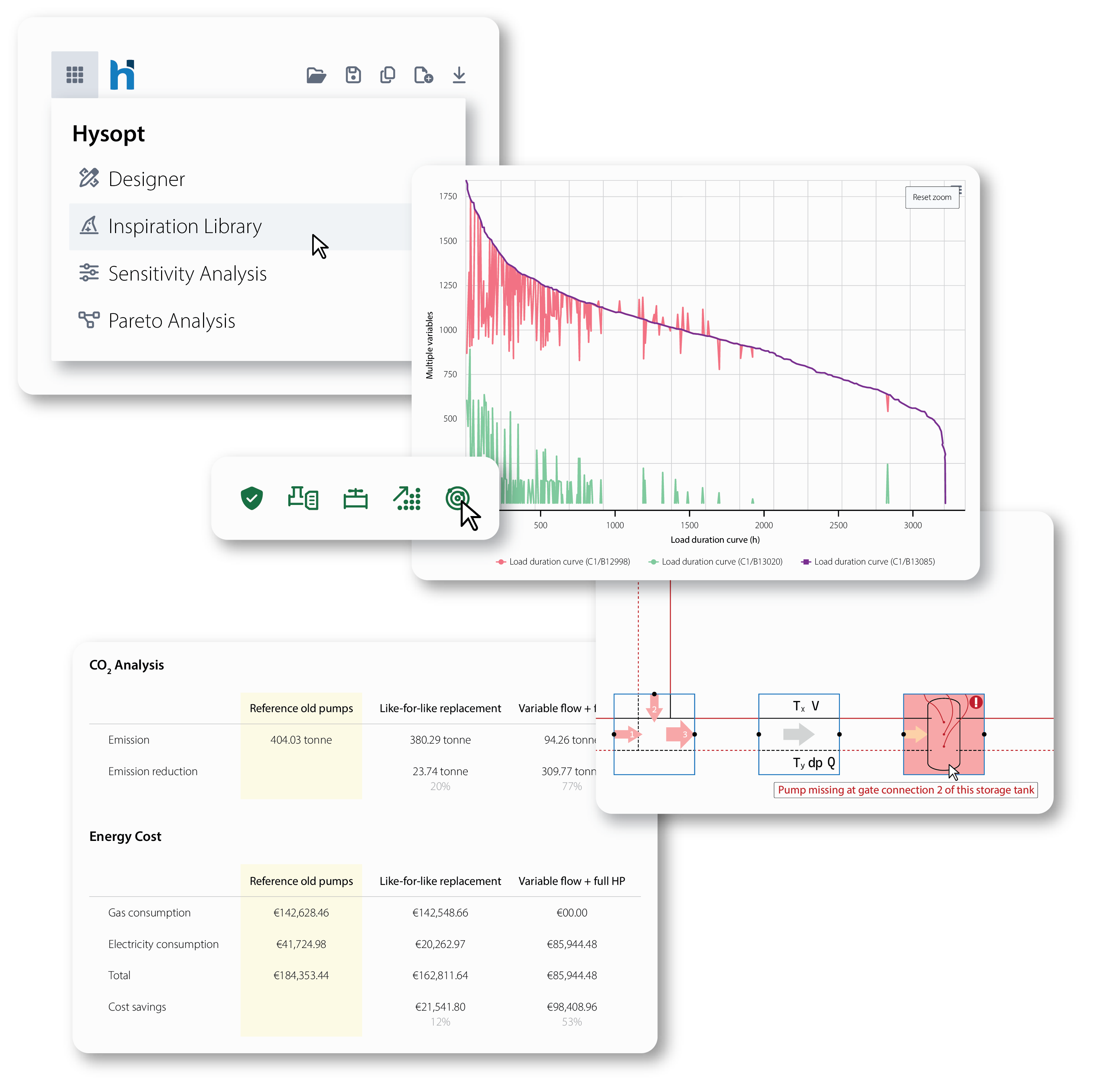
Download the Data Centre HVAC Design Guide
Beyond Static Calculations: A practical guide to validating chilled water systems, failure scenarios and hydraulic behaviour before construction
Get practical strategies for validating cooling system performance, comparing operating scenarios and reducing engineering risk before construction.
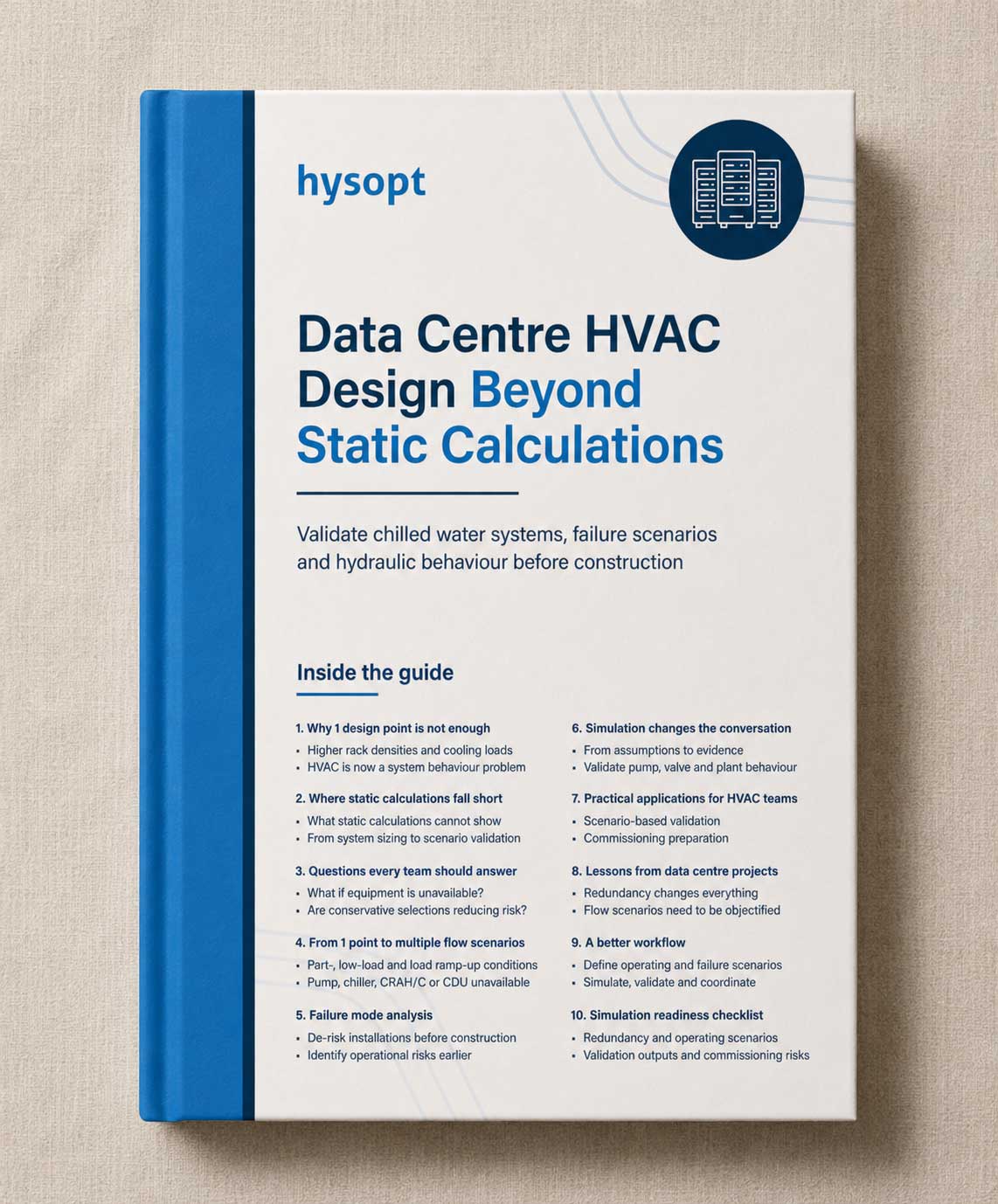
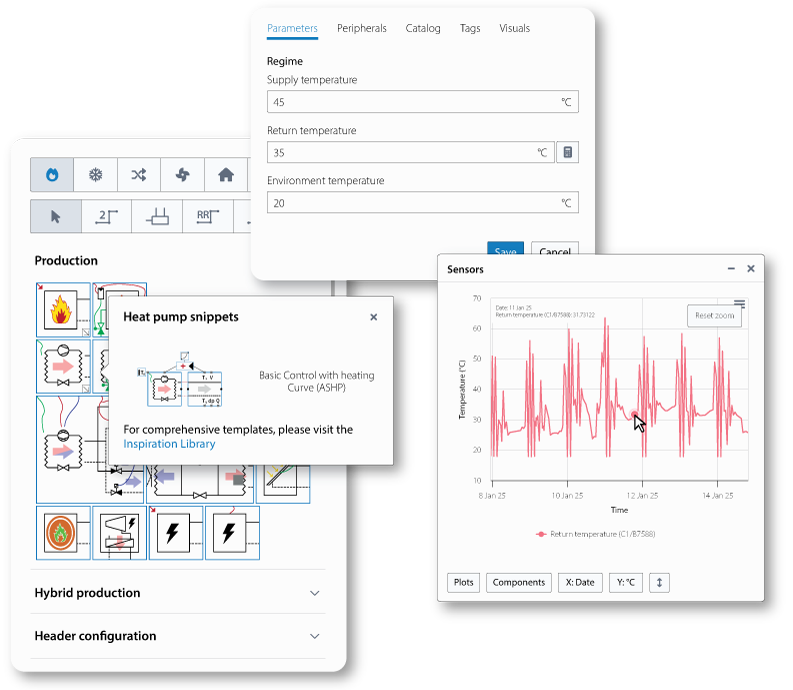
Simulate critical cooling infrastructure
Data centre HVAC systems depend on many connected components working together. Hysopt enables teams to build a system-level model of the hydronic cooling architecture and analyse how the full system behaves.
Typical data centre cooling components and scenarios can include:
- Chillers
- Pumps
- Heat exchangers
- Buffer tanks
- CRAH and CRAC units
- Cooling coils
- CDUs and liquid cooling interfaces
- Control valves
- Variable flow systems
- Primary and secondary chilled water loops
- Redundant production units
- N+1, 2N and maintenance scenarios
- Failover and operating mode changes
The result is a clearer view of how engineering decisions affect system performance, resilience, energy use and operational behaviour.
Working from detailed HVAC calculations?
Supporting confidential data centre projects across the globe
Hysopt is currently supporting multiple confidential data centre projects across Europe, North America and the Middle East.
These projects include engineering studies, hydronic simulation, transient hydraulic analysis and scenario-based validation for mission-critical cooling systems. Due to customer confidentiality agreements, project details cannot yet be publicly disclosed.
The experience from these projects continues to strengthen how Hysopt supports complex data centre HVAC engineering — particularly where teams need to understand system behaviour, validate conservative design choices and assess operational risk before construction.
For data centre teams, this means Hysopt can support the engineering questions that often sit between static design calculations and real-world operation: how the system behaves, how quickly it responds, and how design choices perform across different operating scenarios.
Support transient analysis and scenario-based validation
Large data centres need to understand how cooling systems respond when operating conditions change. Static calculations are still important, but they cannot always show how a system behaves dynamically over time.
Hysopt is especially valuable where engineering teams need to evaluate transient hydraulic behaviour, response times and scenario-based system performance. This is one of the strongest current applications for Hysopt in data centre projects, based on live project experience.
With sufficient design information, Hysopt can help teams:
- Analyse response behaviour under changing operating conditions
- Validate conservative pump and plant selections with simulation data
- Assess hydraulic response during maintenance or failure scenarios
- Compare operating modes before construction
- Understand the impact of load changes across chilled water loops
- Reduce uncertainty in technical decision-making
Need calculated values for sizing, presets or commissioning?
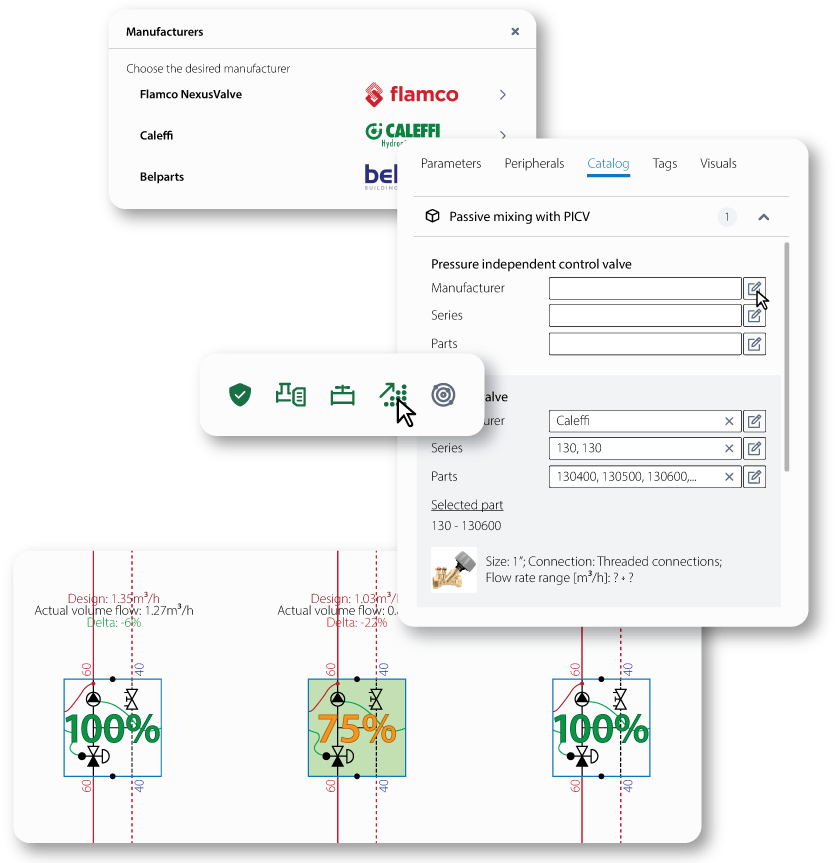
Designed for complex data centre HVAC decisions
Hysopt is not intended to replace every specialist tool used in data centre engineering. Instead, it gives HVAC teams a physics-based simulation workflow that complements traditional design methods and helps validate critical hydronic system decisions.
This is especially relevant when teams need to move beyond disconnected spreadsheets, supplier tools and manual assumptions.

Compare concepts
Evaluate different cooling system concepts before committing to detailed design.

Validate behaviour
Understand how the hydronic system responds under realistic operating conditions.

Reduce risk
Identify potential hydraulic, control or performance issues earlier in the project.

Defend decisions
Use simulation-backed evidence to support recommendations and technical reviews.

Improve collaboration
Give consultants, contractors, owners and technical teams a shared engineering view.

Prepare for commissioning
Support more informed commissioning planning with better system-level understanding.
Keep HVAC design and BIM coordination aligned
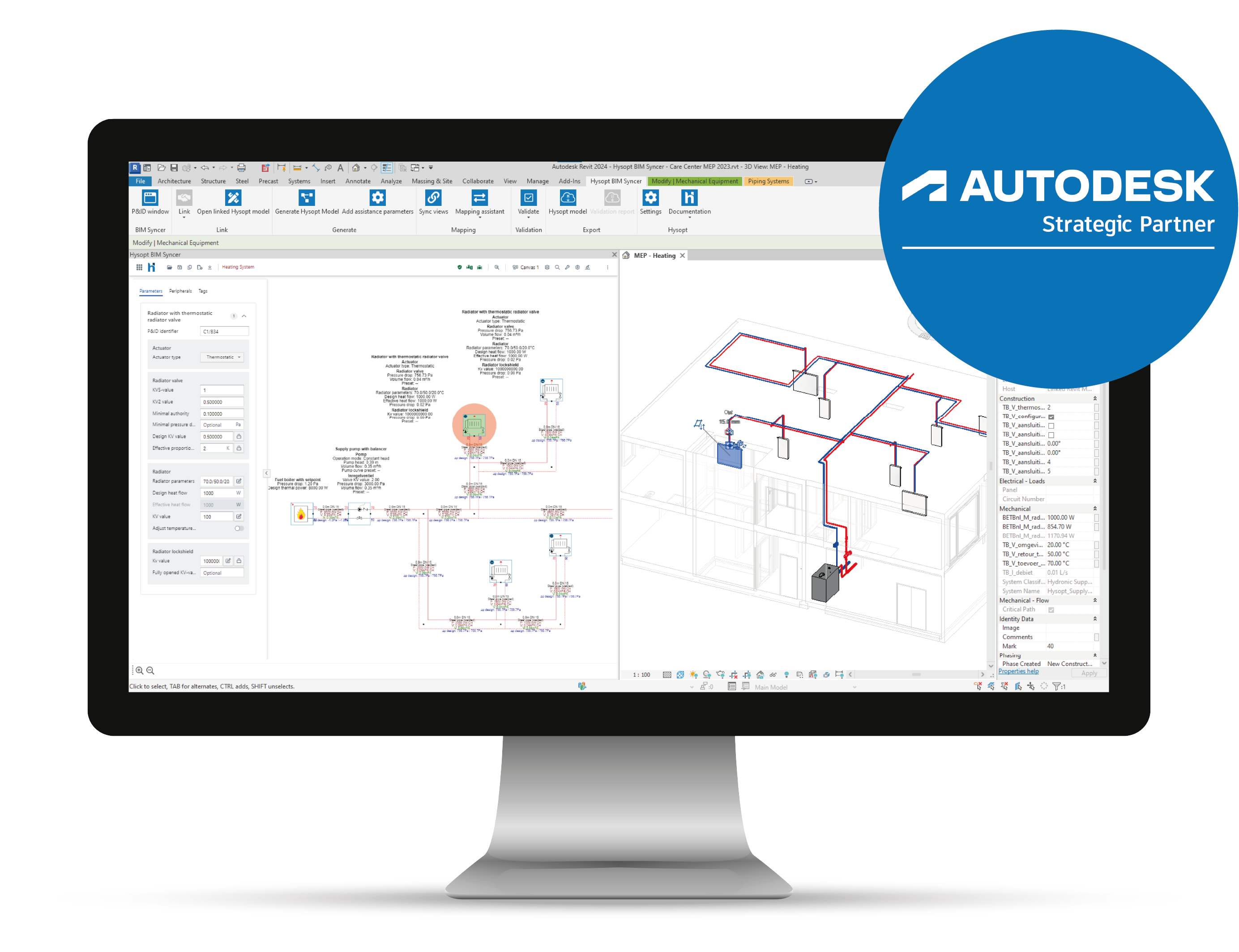
Data centre projects involve multiple stakeholders, changing requirements and strict technical coordination. As designs evolve, HVAC calculations and BIM models need to stay aligned.
Hysopt BIM Syncer helps engineering teams reduce rework by connecting HVAC calculations and BIM coordination, keeping design data more consistent as projects progress.
Need to keep HVAC calculations and BIM models aligned?
Frequently asked questions
What is data centre HVAC simulation software?
How is data centre HVAC design different from commercial HVAC design?
Can Hysopt simulate chilled water systems for data centres?
Can Hysopt support liquid cooling projects?
Can Hysopt model redundant data centre cooling systems?
What is transient hydraulic analysis in data centre cooling?
Why is simulation useful for AI data centres?
How does Hysopt help reduce engineering risk?
What is the difference between CFD and hydronic HVAC simulation?
Is Hysopt suitable for early-stage data centre HVAC design?
Can Hysopt replace traditional data centre design methods?
Uncover insights, success stories, and expert strategies




.png)
.png)