
Medisch Spectrum Twente Builds a Digital Twin Strategy for Smarter HVAC Decisions with Hysopt
“We’ll soon be able to support decisions with simulations instead of assumptions — that’s where the real value lies.”
Kuno Kamstra
Sustainability and Energy Advisor, Medisch Spectrum Twente
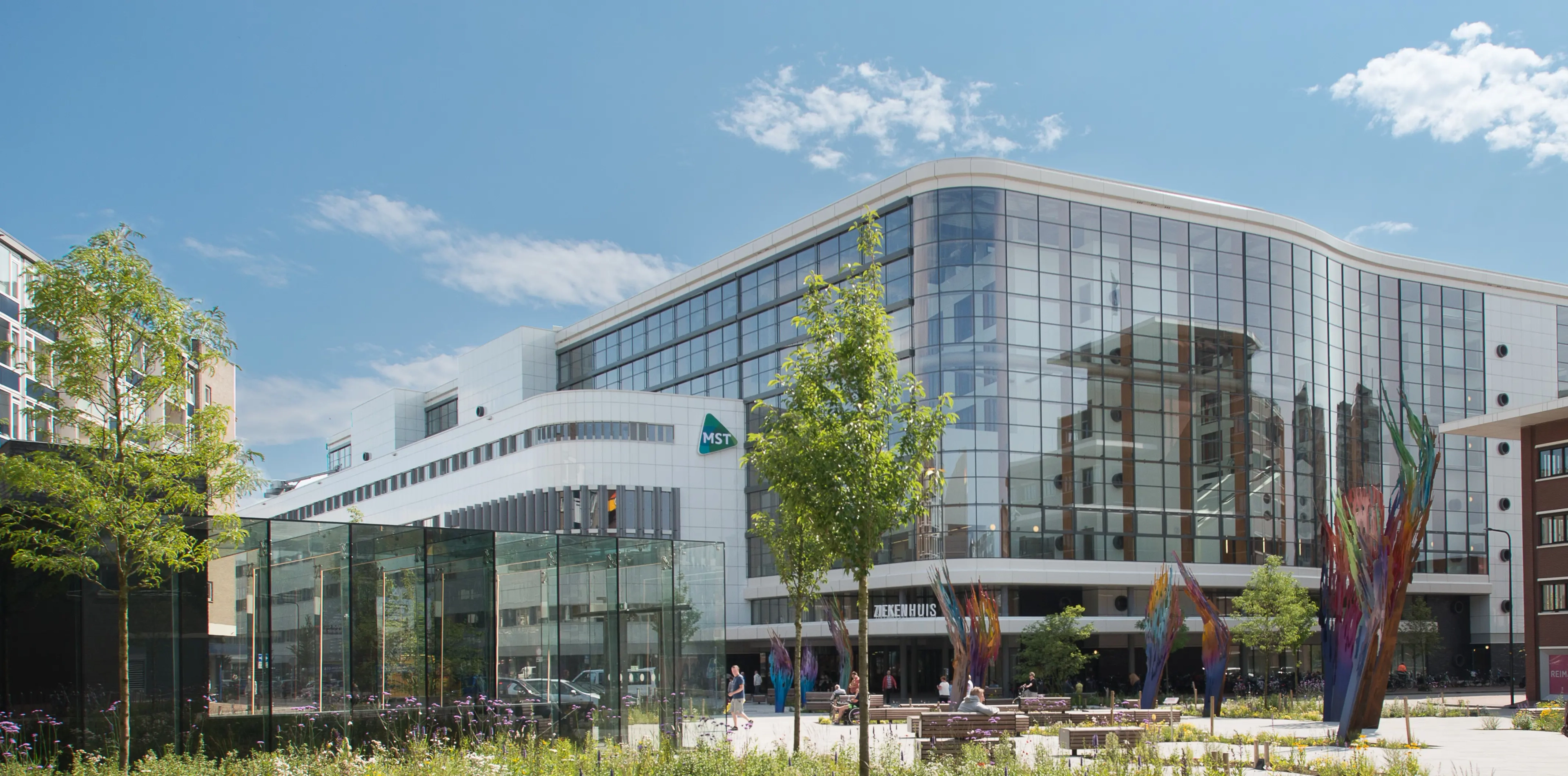
At Medisch Spectrum Twente (MST), energy and sustainability projects are becoming increasingly data-driven. As Sustainability and Energy Advisor, Kuno Kamstra is working on creating a clearer understanding of the hospital’s heating and cooling infrastructure — not only to improve operations today, but also to support future investment decisions.
Together with Hysopt and the Expert Centre team, MST is currently building a detailed digital representation of the hospital’s cooling and heating systems. According to Kuno, the cooling plant model is already close to completion, with simulations and optimisation scenarios expected in the coming months.
What makes the project particularly valuable for MST is the ability to compare simulation results with recommendations from external consultants. As Kuno explains, the goal is to create “a kind of double check” that helps validate future design decisions using measurable system behaviour instead of assumptions alone.
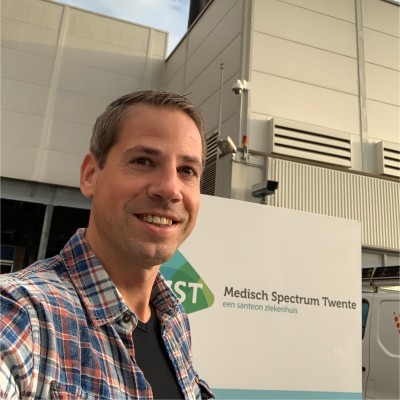
“We’ve already found several bypasses that need to be removed — otherwise we’ll never get the return temperatures down.”
Kuno Kamstra
Sustainability and Energy Advisor, Medisch Spectrum Twente
Building a clearer view of the hospital infrastructure
One of the first steps for MST was creating a more structured overview of the hospital’s HVAC systems. Rather than relying on fragmented building management system screens, Kuno combined all installation schematics into one logical overview.
As he explains, “you immediately recognise the systems again when you look at it,” making it easier for both technical teams and operators to understand how the installations are connected.
This structured approach is now helping MST translate the real installation into a simulation-ready digital model. According to Kuno, the long-term goal is not just to visualise the systems, but also to simulate and analyse their behaviour under different operating conditions.
Using simulation to validate future energy decisions
A major focus within the project is the optimisation of the hospital’s cooling and heating infrastructure, including the potential integration of water-to-water heat pumps.
Kuno notes that one challenge today is the relatively high return temperature in the heating system. “There are several bypasses still open,” he explains, “and the water immediately flows back again.” These issues need to be resolved before future low-temperature heat recovery strategies can function effectively.
By modelling both the cooling and heating systems together, MST aims to simulate different scenarios and evaluate which investments make the most sense technically and financially.
For Kuno, this is where Hysopt becomes especially valuable. Instead of relying purely on consultant recommendations, the hospital can use simulation results to verify assumptions and support budget discussions internally. As he explains, “then you can really say: these are the simulations, this is why we’re choosing this solution.”
Creating long-term value through a digital twin approach
Beyond the immediate optimisation projects, MST also sees long-term value in building a digital twin of the hospital infrastructure.
Together with Hysopt, the hospital is developing a model that will eventually allow engineers to investigate pipe sizing, detect hydraulic short circuits, analyse energy flows, and test operational improvements over time. Kuno mentions that the team has already identified several short-circuit flows in the installation that will need to be corrected.
The collaboration with Hysopt’s Expert Centre has also helped accelerate the process. Kuno praises the speed and independence with which the models are being developed, explaining that building this level of detail internally would otherwise have taken significantly longer.
At the same time, MST wants the project to become a broader reference case for the healthcare sector. Kuno is already exploring ways to connect with other hospitals in their network to exchange experiences around digital twins, HVAC optimisation, and energy simulations.
As he puts it, the objective is not just to build a model, but to create “something other hospitals can also learn from.”
Ready to engineer HVAC systems with greater confidence?
Reduce oversizing • Eliminate rework • Defend design decisions • Predict performance before construction
Design, validate, simulate and optimise hydronic HVAC systems using one physics-based digital twin.


.png)
.png)