DOMESTIC HOT WATER DESIGN & SIMULATION SOFTWARE
Design Efficient
Domestic Hot Water Systems
Meet hot water demand with a clearer understanding of plant capacity, storage and system performance. Hysopt helps engineering teams design and simulate domestic hot water (DHW) systems, from shared storage to apartment systems with heat interface units. Connect demand calculations with heat sources, controls and heating-side hydraulics to reduce oversizing risk and make better design decisions.
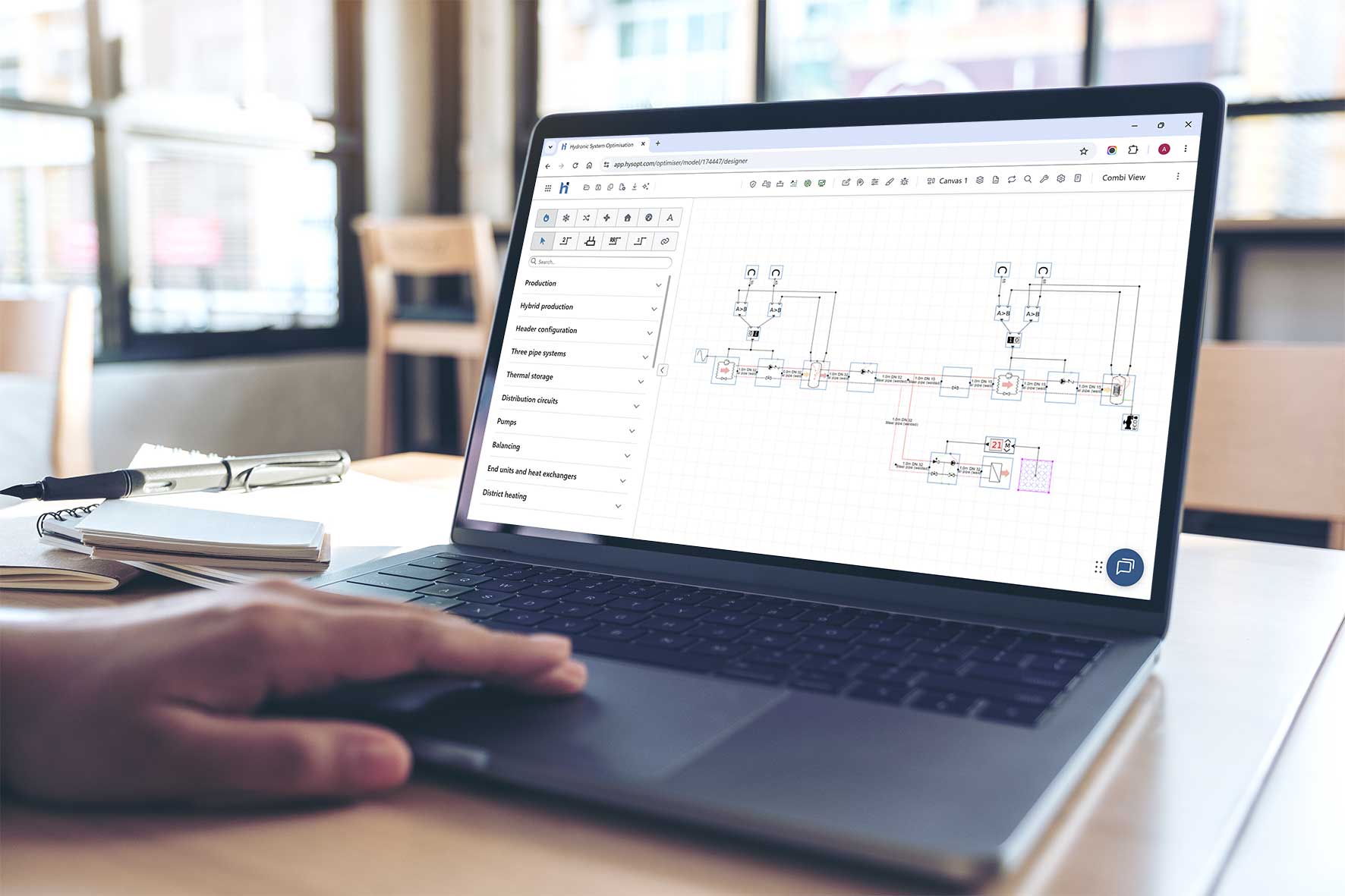

Size systems around how hot water is used
Not every tap and shower runs at the same time. Adding up every individual peak can lead to unnecessary capacity and cost.
Hysopt applies selectable diversity methods to calculate DHW demand within and across dwellings, then carries those calculations through the connected heating system.
- Account for simultaneous hot water use
- Combine demand across apartments and shared branches
- Calculate the flows and heat loads needed for equipment selection
Give your team a clear basis for sizing decisions, with demand assumptions that can be checked and explained.
Connect hot water demand to the heating plant
A DHW demand figure is only part of the design. The flow required from the heating plant also depends on temperatures, heat-exchanger performance and the combination of heating and hot water loads.
Hysopt calculates primary flow rates and return temperatures through HIUs and heat exchangers, then combines DHW and space-heating loads using the selected aggregation method.
- Understand how HIU selection affects primary flows
- Account for heating and hot water in shared pipework
- Size primary heating pipes using the calculated design flows
Make decisions about the connected system with a clearer view of what the plant and distribution pipework must deliver.


Check hot water storage and recovery before construction
Storage volume, heat-source capacity and charging controls all affect how a DHW system responds to demand.
Use Hysopt to simulate hot water draw-off profiles and compare storage arrangements within the wider heating system.
- Compare storage volumes and charging strategies
- Assess storage temperatures and recovery after hot water use
- Examine how DHW charging affects shared plant operation
See how your proposed system responds to the selected demand profile before committing to equipment and controls.
Compare heat pump and boiler options for DHW
DHW production and space heating can place different requirements on the same heat source. Understanding that interaction helps you choose a practical route to electrification.
Hysopt supports modelling of boiler-fed DHW storage, heat-pump systems and booster heat-pump arrangements. Compare configurations, operating temperatures and control strategies in a connected model.
Evaluate predicted energy use, operating costs and CO₂ emissions using your project assumptions, and show clients the trade-offs behind your recommendation.

See how Hysopt could support your DHW design
Planning a project or exploring better ways to design hot water systems?
Leave your details and our team will get in touch to discuss how Hysopt could support your next design decision.
See what is changing in HVAC engineering
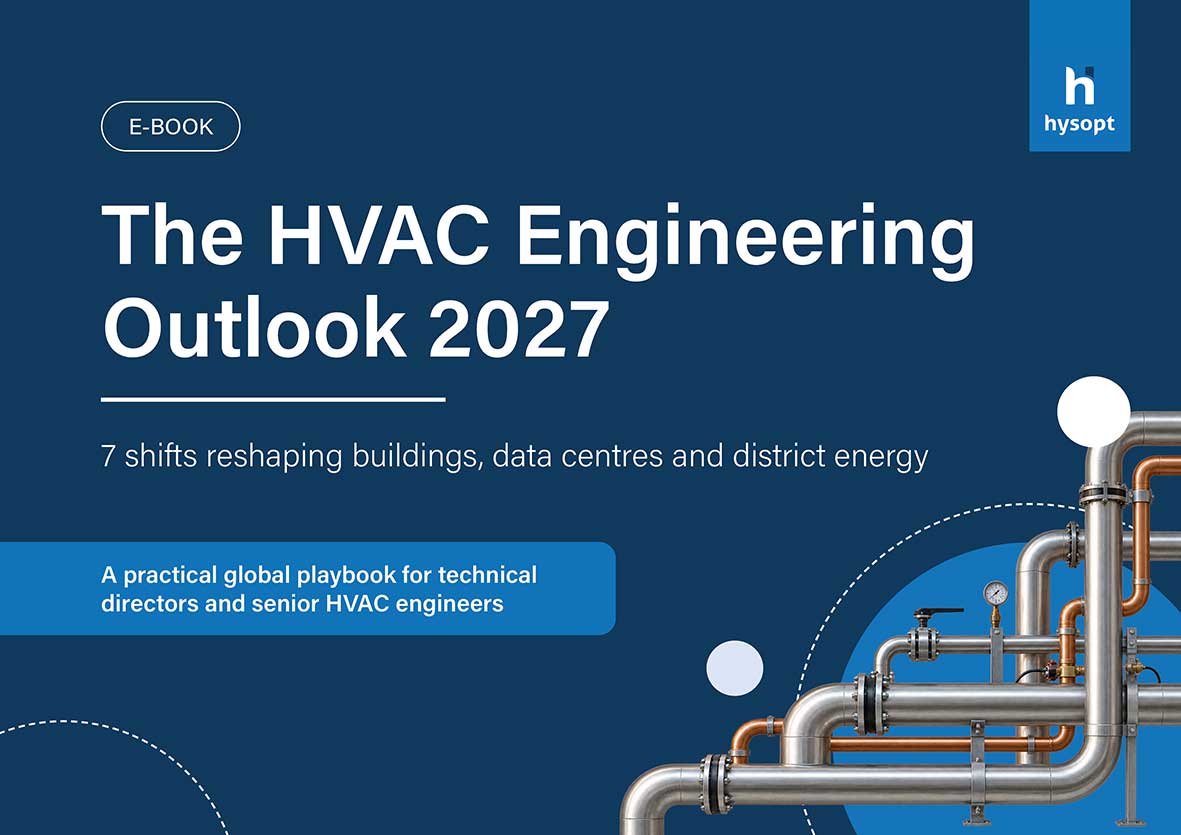
Explore seven shifts shaping the industry in The HVAC Engineering Outlook 2027, including electrification, grid constraints, district energy and verified performance.
A wider view of the developments influencing your next heating and hot water project.
Frequently asked questions
What is domestic hot water design and simulation software?
How does diversity affect DHW system sizing?
How does Hysopt combine heating and domestic hot water demand?
Can Hysopt simulate heat interface units?
Can Hysopt model DHW storage and booster heat pumps?
Which DHW diversity methods does Hysopt support?
Is domestic hot water the same as district heating?
Uncover insights, success stories, and expert strategies